Monday

In love with Ireland


Going to Ireland was very different from travelling around the USA or M'sia. Half the charm of Ireland is spending lots of time in the small, quaint Irish towns. 


I'd recommend spending a couple of days in Dublin, but spend more time out in the middle of nowhere at small bed and breakfasts:D -leaves you closer to the castles and sites you want to visit. You'll come away with a better view of the romantic Ireland that most travellers including myself went to see.


Best way to see Ireland is to either rent a car or take a bus/train to get around great country side and small towns along the way. Our hotel was barely a 5 minute cab drive away from the shopping streets which looked quaint and original… but because we had landed in the early hours, the shopping streets were not yet open, nor were our rooms ready, so we decided to go walk outside - a perfect day, complete with a musical merry-go-round and the nicest cafes surrounded us. With grey skies, threatening to rain sitting in a cafe with a warm cappuccino suddenly Dublin became the most happening city in Ireland - I guess when we are less hungry we actually appreciate the subtle beauty, the calm perfection of this, very old yet extremely modern city! After a leisurely breakfast we headed to a multi brand super store, very avant-garde and did some early shopping :DD


The cold and the rain were no deterrents for us – we visited an art gallery and where delighted to see Leonid Afremov’s vibrant paintings-  a celebration of art and colours,  a 10min walk took us to the chocolate factory that warmed our hearts on a cold and wet  rainy, rainy day:DD


About noon we headed for the Guinness Factory tour ( a tip: buy the tickets on-line to save yourself from long queues) 
which gets a big thumbs up, because what you are really paying for is getting up to the top to enjoy a pint with a gorgeous view of Dublin City. We skipped the guided tour which felt slow, and boring – headed to the Gravity bar with views of the city and the free pint. There is a great atmosphere and as the sun decided to warm us nicely, we started falling in love with Ireland. Dare I quickly add here, Guinness is not to my taste (it was my first and last try of it) :D


Of course you can't go to Dublin and not visit Temple Bar. Irish atmosphere is contagious here! You don't
pay to get in and some nights they have live music. Funky shops, eclectic cafes, hordes of stylish young Europeans have made Temple Bar, a definite pit stop whether in Dublin for a day or a week. Get your bearings in the day time then explore the night-life! Tante Zoes- American, Creole, European Temple Bar, Dublin's own French Quarter for lively Cajun/Creole restaurant…much, much to take in here


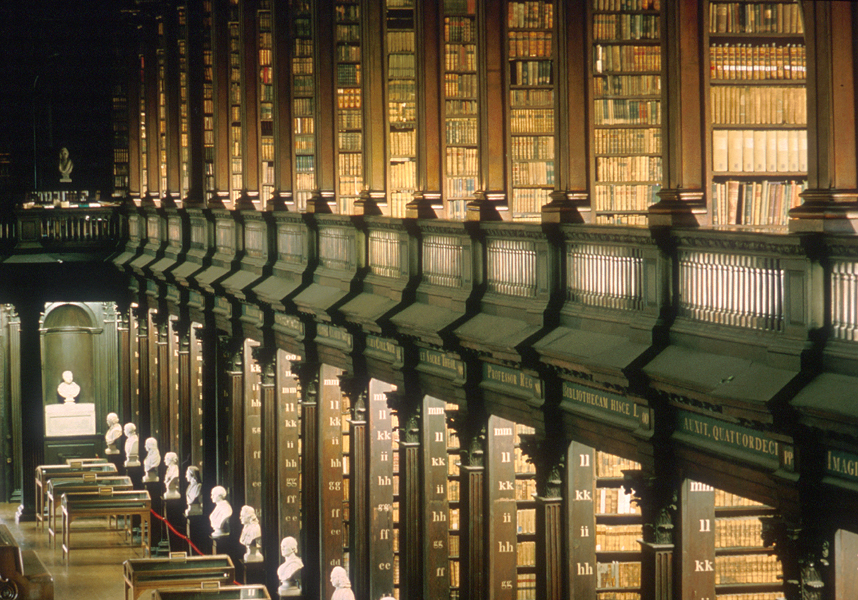
Book of Kells was fascinating, even if you're not Christian or religious. The detail, the artwork - simply amazing. Before you go, however, read up a little on it. It is so much more impressive it you know at least a little before you go. Be prepared for the crowds. A place that clearly belonged to earlier times- has beautiful architecture, cobble-stone pavements, campanile, student chatter & bustle - all add to the great sense of history of this perfectly located university, with its wonderful libraries & the Book of Kells as samples of all that is on offer.

Day one we had packed in much, were dead beat with a longish flight behind us, and the non-stop touring since early hours, we stopped at a delicatessen, had some coffee  and waffles to revive our flagging energies, bought some wonderful pastry for our ‘after lunch dessert the next morning’ - except, it didn't make it - we ate it as a late night snack! :DD

Dublin’s Grafton street is another awesome lively part of the town. The street is booming with street vendors, entertainers and uber cool designer shops. The coffee shops offer wonderful treats with high energy levels. It is the main shopping street in Dublin – need deep pockets as the stuff is enticing. There are plenty of reasonably priced shops to choose from as well, depending on the budget.


Nice hip atmosphere with many talented buskers all the way up and down the street. It's a place you can easily spend an entire day before you realize the day is over! You can't help but notice the amount of shops that are now closed on Grafton St. –On speaking with the locals, it became apparent, that the high rents are unsustainable in a country that does not understand the perils of expensive property. A wake up for Bombay?


Day 2 early hours saw us back on Grafton Street but now it was near empty with only a few solitary people on their way to office buildings , or darting around delivery trucks. The bronze Molly Malone statue fits the street quite well in the morning light without tourists posing in front of her for photographs; however, her low cut dress seemed a little daring for the sunrise! :DD\


We anchored at Bewleys CafĂ© – for Tea (and coffee) and scones - the magic of hot water pouring  into the cup, admiring the stained glass, the artwork, and the highly decorated architectural details of the 1920s building, simply make you wish to linger on forever over your cuppa. We ordered takeaways, stepped out the front door onto the colorful entrance tiles before continuing our stroll towards St Stephens Green (park) – where we parked ourselves on lovely benches to see the swans and ducks scuttle about on the pond in front of us until our tea and coffees were done with.  Day 2 morning bliss of quiet soon gave way to click-clack sounds of dress shoes hitting the footpaths, rumbling buses, taxis, delivery trucks, and other furious sounds of the city.


We saw a heckalot sights and sounds – many captured in the mind, at the risk of making this post too long, shall take a break now, will look at posting another post on Dublin soon.


Tuesday

Trivandrum, Kerala.


 Kerala is the only democratically elected communist leadership in the world as well as the most successful state in India with 98% literacy.

Thiruvananthapuram (Trivandrum) became the capital of Travancore in 1750. The city gets its name from the word, Thiru-anantha-puram, meaning the city of Anantha or "the town of Lord ANANTHA", the abode of the sacred Serpent Anantha on which Lord Vishnu, the preserver of the Hindu trinity, reclines. Thiruvananthapuram, the capital of the state of Kerala is a beautiful seaside city built on seven hills. The city is characterized by its undulating terrain of low coastal hills with narrow winding lanes and busy commercial alleys.


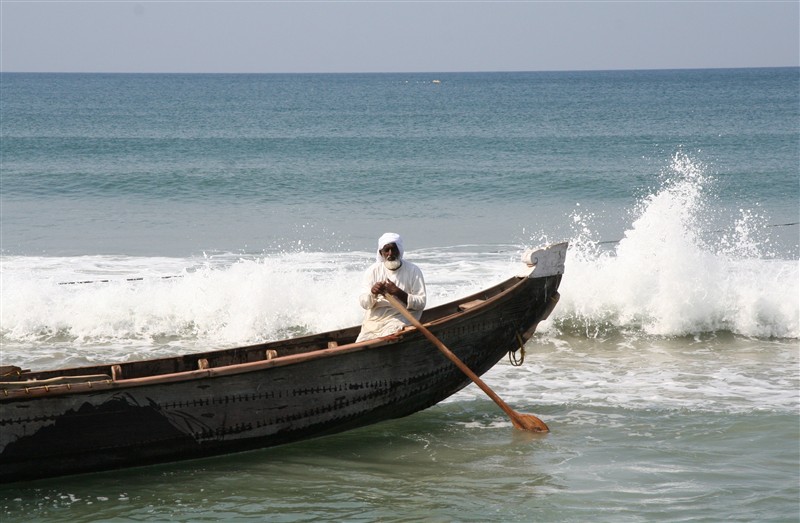
Kovalam is this beautiful compact crescent shaped beach, lined with a small number of restaurants, yet not filled with backpackers or tourists Dotting this long stretch of crescent shaped beach is the Lighthouse beach, Eve's beach and Samudra beach. Very popular with foreigners for tanning, swimming in the early hours and through the day, however, by evening this beach is mostly frequented by Indians who come to see the beautiful sunset. Every 5am we would see at least 40-50 men pulling in trawlers/nets by hand which had been laid some time earlier. And by 8am all the haul is distributed, fishing activity ceases. You do witness a lot many boats plying at all times during the day, it’s a working beach indeed.


Stepping into the city, you witness it's splendid past in it's old buildings, most of them built in wood in the Kerala style, with tiled roofs and carved gables, in it's botanical garden and zoo with it's quaint museum; in it's wide roads and public buildings; and in it's lively intellectual life. Some of Kerala's leading filmmakers, poets and writers live here.

The historical heart of the city is in the Fort area and if you want to have a peek at the dance drama scene then behind the temple (in the Fort area) is Margi school of Kathakali –the place to ask about authentic Kathakali performances. To see arts and crafts including 12th century Chola bronzes, 15th century woodcarvings and minutely detailed ivory work check out the Napier Museum


Trivandrum is not a typical capital city, more like a small town. Tho rapidly growing into a techpark city, the topography retains old quarter clusters around the temple, the colonial mansions, and churches alongside modern high-rises. Trivandrum has managed to retain some of the ambience characteristics of Kerala such as red tiled roofs, narrow winding lanes and intimate corner cafes.


 High quality highways are not yet in place, but we could see a lot of work underway on roads. I do not remember the name of the interior roads we travelled on to reach the airport, but those roads were something else. At 4am in the morning those roads were like the runway of the airport with central LED strips for kms at a stretch! Super awesome!


Perhaps one needs more than 2 days to get to know the pulse of the city, perhaps my stark impressions may deepen.

My summary - A sleepy town, soon, an emerging city…  

Thursday

Food in Varkala, Kerala


Yes I might be a lil biased when I say Varkala is a stunner, certainly so, when looking down on the beach from the red cliff path! But the real beauty of Varkala is its laid back atmosphere. There’s no beeping horns, smoke-belching exhausts or lunatic driving. Indians don’t really holiday in this part of Varkala and you generally only see ‘foreign’ faces – mostly backpackers. 


A strip of restaurants, souvenir shops and hotels stretches along the cliffs for about a mile and apart from the halfhearted attempts from the vendors to attract you into their shops for a look (‘looking is free’, apparently) it’s a lovely walk to do. While some roads run perpendicular to the cliffs (and a few directly to the sea), the main artery is a brick pathway that runs for about 2km along the edge of the cliffs; there are no vehicles allowed here, although the rare motorcycle does slowly putter by. 


Along with restaurants, hotels and guest houses facing the sea together with shop after shop selling jewelry, clothes, wall hangings, etc. which is just the first row, further back among the coconut palm trees you can find many more rows of hotels of every price range (there is road and vehicle access back there) and occasionally more shops too.  


We were ridiculously lazy in Varkala but, in our defense, it’s that kind of place. There’s very little to do aside from yoga classes, Ayurveda massages, eating and drinking. Time was spent reading in the hotel garden overlooking the sea, or eating and drinking in one of the many stunning restaurant roof terraces which line the cliff edge and have fantastic views over the beach and water below - the Sundowner heaven


Each restaurant had more or less the same menu, with a huge selection of Italian, Thai, and Chinese and of course Indian dishes. None were stunners, after having experimented the varied many eating places the first few days; we settled into a pattern with a handful good ones. There are plenty of restaurants, all with amazing views; mellow music and a few even offering free Wi-Fi. 


After an early morning swim we’d ascend the cliff to park ourselves for breakfast at the Cafe Del Mar or Abba for an English or American breakfast. Food was always fresh, delicious and mostly organic. Varkala is a sea-food lover’s paradise. Many restaurants display in front seafood caught by the local fishermen. Select your food, get it prepared and savour it watching the sunset. The ubiquitous Kerala food is not easy to find on the cliff unfortunately. Coffee Temple was our temple for good coffee especially given the need for good quality caffeine.  Frozen yogurts is a lovely place to visit for its ambience and cheery mood, simply makes you happy. Blue Marine restaurant and Ginger cafĂ© were also frequented by us for dinner/snacks when the urge was to have Indian food. 


It wouldn’t be unfair to say our best meal was the last meal in Varkala - at the hotel, when the cook, especially prepared for us, soft idlis, dosas and crisp crunchy vadas with piping hot sambar and chutney. That said, the beauty about a place like Varkala is- it is nice to be able to sit in a restaurant and actually take as much time as you wish over your drink/meal. No one will hurry you up, fire you a cup of tea swiftly followed by the bill, and get you out the door as soon as possible to make way for the next customer 
  

Varkala is beyond anything that we had envisioned—in a good way. Or perhaps then, we had very little expectations. One never tired of the view from on top of the cliffs, one soaked in the laid back energies. Everyone in Varkala is very friendly.  I often find that in a really chilled out place like Varkala where there is little to do but relax and watch the world go by that I find myself contemplating my life, my plans for the future and the ‘what’s life all about’ conundrum :)

Monday

Varkala. Kerala- India


We arrived by night in a hotel that was nicely lit. After freshening up we stepped out to explore the property and the beach. Our friends were holidaying in another hotel, we had to meet them for dinner, so they asked us to walk down the beach road towards Clafouti. We asked the hotel staff for directions for the ‘beach road / cliff path’ and here we came up with some early ‘learning’s’:
v  English language is an alien communication tool for the locals
v  Sense of distance is equally foreign to them
v  Power blackouts is a constant phenomenon in Varkala
v  Toddy (liquor) is a constant companion to most local males
v  DO NOT expect professional anything :D

We walked from our room to the boundary of the hotel property, guided by the sound of the ocean surf, wanting to locate the “cliff path” - we reached the edge and looked down and saw the white surf of the waters, and just then there was a complete blackout. Complete darkness! Slowly a few lanterns lit in the distance…but not enough to show us clearly what was “the beach road / cliff path” -since we were not yet familiar with the geography of the locality, it was unnerving standing in the dark, we retraced our steps back inside the hotel.


We requested for transport as the Hotel staff said Clafouti is approx. 2km away. He called for an auto whose driver was drunk- the auto in standstill mode, was sliding in the reverse, the driver was oblivious to it. We asked the Reception to get us another auto, but the Receptionist told us its ok, he is in control, there is no problem- so despite our senses screaming otherwise – we took this transport. Given it was late, given it is a small town, given friends were waiting, given we wanted dinner and some sleep for that night.  The worst auto ride ever!


The 2km distance turned out to be less than 2 minutes for which we paid 100 bucks. To top it, our nerves were grazed, being on the edge with the driver reeking of alcohol, not in control of his auto on the upward climbing slope, on a pitch dark narrow road, with not a person in sight (post the Delhi incidence) was a horror of all sorts, the mind was working its wily hands about! Such was our relief to have reached Clafouti in one piece- incidence free, unbridled joy was the only feeling we soaked in!

It took us the rest of the trip to realize that these (above) first impressions (while some maybe true) – were a bit harsh. Largely speaking - the locals are harmless even when drunk, they are genuine, warm, and honest and trusting them is easy as they are humble; despite the city menace narratives we all unconsciously carry about with us.


Varkala is beautiful. A wonderous place. It is a Hindu belief that a dip in the Papanasam beach of Varkala can wash away your sins. What I can indeed say with certainty is that it will wash away the stresses and strains of a busy life. Our hotel was situated on the seashores of the magnificent beach of Varkala, providing us a panoramic view of the setting sun, the lashing waves, the coconut orchards, the fishing boats & the anglers at work.

You cannot tire of walking on the beach cliffs, enjoying the freshness of nature, be a sun bathing enthusiast or simply be; on the silky beaches, around the many hotels dotting this 2.5-3 km stretch called Varkala. The walk along the cliff takes you to many interesting spaces, some offering Ayurveda massages, special oils, yoga classes, even a library while you wait for your order or sip on a drink.

What is unique about this sea resort destination is that Varkala is a small town, pretty much off the beaten track. Located an hour away from the Trivandrum airport, the growing number of curious travellers who decide to stop by and then end up planning their next vacation here, is a testimony to the fact that Varkala is getting popular. (PS: not sure if that is a good thing tho…)


Varkala is a virgin beach with a beautiful cliff lining the beach stretch with a string of eateries and shacks offering a choice of world cuisines. The walk that seems to lead you to the end of the cliff gradually slopes down until you find yourself climbing down on to the other side of the beach. It is also a more secluded area on the beach which some tourists who discover the path, seem to prefer. No matter how many times I walked along the cliff road separating the sea and the hotels/shops, I invariably was tempted to stop and soak in the sights a zillion times over. Having grown up in cities and metros most of my life, one finds here the peace and tranquillity that the human soul craves for.


I mean where else would you find yourself standing under a canopy of palm trees staring at sparkling, calm aqua blue waters lapping gently at your feet and then turn around to see the tumultuous waves crashing against the rocks along the shore on the other side. And all this under a clear blue sky forms the perfect setting for an artist to capture. 

Friday

Bali : Art and Divinity (2)


I’ve been incredibly slack and not posted all details in one go. The fear that I maybe forgetting details, prompted me to get busy with this post.

Ubud is far removed from the drunk bikinis landscape in Kuta, is known as the designs and disciplines hub, dominated by music classes and exhibitions. The strong influence of Hinduism is evident in Bali's art, culture, everyday life and in the two dance performances we saw – a Kecak dance, which depicts a battle from Ramayana, where Vanara (monkey) helps Lord Ram fight the evil Ravan.  The dance is accompanied by an all-male chorus, with no musical instrumentation.  It was originally a religious trance-inducing ritual, but was transformed in the 1930s into a dramatic dance show intended for Western audiences.  It's an interesting example of how Hindu ritual in Bali has become "art."  At first, I was a bit cynical about watching a performance that wasn't "indigenous" and instead was designed merely to entertain foreign tourists.  But with persuasion gave in, indeed was entertaining. We also saw the Barong dance, which - like the Kecak dance - tells an ancient mythical tale of the battle between good and evil.  Among other fanciful and dramatic plot points, the dance involves a spell of dark magic that makes soldiers fighting for the good want to kill themselves by stabbing themselves, thankfully, the dance also involves a counter-spell that somehow makes the soldiers resistant to their self attack. Reminded me of the dance performances we saw in Kerala.

Couldnt help but sense, there's a good dose of theatre in everyday life.  Just walk down the street and you're likely to see a crowd of impeccably dressed people headed to a religious ceremony, or a colorful festival associated with a marriage, birth or death.  Indeed, whenever you drive (or in our case, were driven) anywhere in Bali, it's a good idea to take into account the congestion that is caused by the ritual processions scheduled for that day.  

We also visited a few jewelry shops, batik painters, wood artisans and a couplea exhibits of artists’ collective of gorgeous paintings of life in Bali–scenery of rice paddy landscapes, women working in the fields, beautiful portraits of local Balinese. Wonder why India doesn’t have such a town where arts and crafts are exhibited to full glory ( Pondicherry perhaps?)

Local Balinese tradition is incomplete without mentioning the temple visits – our 1st stop was at the sacred, famous sea god temple Tanah Lot. We were told by our hotel, that erosion had threatened this temple’s survival; and hence, a comprehensive restoration and stabilization program saw about a third of the ‘rock’ replaced with artificial rock and concrete – courtesy of the Japanese Government. Today, it’s a popular site for both tourists and pilgrims. Tourists are not allowed in. Only certain Balinese people about to perform the ritual prayer are allowed entry into the temple. What we did get to see was the wonderful Sun God setting by evening, eclectic fireworks in the sky. We also the coral life on the shores, hanging around these corals are black and white snakes which local folklore states to be protectors of the temple from all evil influences.

The 2nd temple we visited was Pura Ulun Danu, a Shivling  in a water temple located on the edge of Lake Bratan. Upon arriving here, we were given a sarong to wear inside (Hindu tradition) before making our way through the gates. The first thing we noticed is the lake inside the temple with another smaller temple sitting in the middle of. A little bridge spans the gap for people to walk over and the view of the surrounding area from here was quite something.

Another temple we went to was a masterpiece of stone carving standing over 100 feet high and wide. We climbed the stairs and took pictures from the bottom before proceeding into the temple itself. After dressing the part once again we ventured into the black rock temple filled with creature after creature carved into its walls. I felt if Lara Croft could have been there she would have been shimmying up those statues before you could whistle. And the main attraction in this place was a massive opening in the mountain wall where a huge cave opened its mouth to the outside world. As we approached we could hear the screeching sound of thousands of bats hanging from the ceiling. They all jostled for position and every now and again one would fly right by reminding you just how creepy they are. We asked our driver where the cave goes and he said (in his scary voice), "all the way inside the mountain where the snakes live". I asked if anybody had ever been inside all the way, to which he replied "would you want to go in there?" he's got a point I guess. We placed the customary frangipani flower behind the statues ear and left the place.

Yes in many ways because of its Hindu affiliation, Bali reminds one of India. The warmth, the hospitality, the willingness to explain their culture, makes Balinese people special.

Sub text: Will come back soon and close the Bali trilogy.

Saturday

Bali: Isle of Gods (1)


Lush and tropical, Bali is rich in traditions of spirituality; where the ancient Hindu culture blends seamlessly with nature and daily life. 

I had no expectations of Bali, but the serenity in some places was startling, for us city folks. We spent an afternoon at Biku, a place run by members of the royal family of Ubud. This restaurant occupies a 250yr old hand-carved wooden house from Java, and is located amidst rich green paddy fields. We were there for lunch followed by high tea, a wet rainy afternoon, cocooned in tranquillity; this day was an education in local and international leaves. The brew is served with Ritz-worthy finesse and is accompanied by strawberries and cream, scones, finger sandwiches, and homemade cakes and pies. A corner of the restaurant is occupied by Ganesha Bookshop, which has a fine selection of page-turners for the beach. Not complaining about the serenity, come evening we were kinda restless for some much needed distractions. 

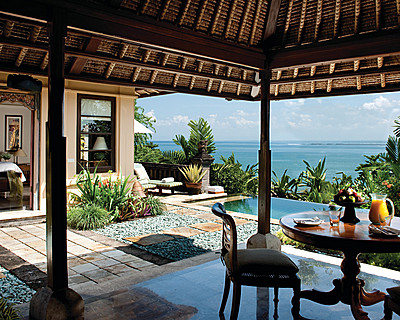
The best beaches in Bali are in Kuta, Jimbaran, and the Bukit Peninsula. Kuta is particularly busy,we didn’t spend no time there. We dropped anchor at Jimbaran: great sand, no big crowds, an uninterrupted breath-taking sea view, private space to relax and unwind. Most of Bali’s lovely beaches are good for swimming, surfing, or just lounging on the sand. The hotels and villages are responsible for their heritage and hence one sees them provide daily clean up and grooming of beaches.

The quality of a beach changes drastically between seasons, depending on the location of the beach and the direction it faces. Our hotel beach was rocky, but about 50 meters away towards the beach cafes, it was heaven. The barbecue restaurants are great at night for simple non fussy food with the pleasure of toe diving in the sand.
Hospitality is an integral part of the Balinese culture and religion. Everywhere you go, you are made most welcome and most special. It is so geared to tourism. Lines of shaded trees along the roads, a stretch of beach for sunbathing, a strip of shops for shopping, a variety of  restaurants for wining and dining, the options are endless.

We visited a buzzing market place, teaming with people selling their wares. The smell of petrol fumes and cooking meat was thick in the air and it reminded me a little of China town in KL. We kept our money firmly in our pockets and didn't take our hands off it. Our driver insisted we try what he had bought for us once we were back in the car. A Balinesian speciality: rice with brown sugar and honey cooked until brown. With syrup drizzled all over it, in a banana leaf and served with a spoon made from the same leaf! The taste was lush.

Another food that is worth mentioning  (for the uninitiated)  is the Kue Lapis, basically a multi-layered cake which is meticulously made by hand in Bali by first, spreading a very thin layer of cake mixture recipe onto the baking pan. This is then placed in the oven and carefully baked under low heat until it solidifies. Then, another equally thin mixture made of a different flavor is spread over the first layer. The baking pan containing 2 layers is again placed into the oven under low heat. Once it solidifies, a 3rd layer is added. This process is slowly and painfully repeated for about 20 times until you get the Bali Lapis Legit — The Layered Cake. The taste is heavenly.  Smooth textured combined with pure decadence. Gotta indulge in small portions to slowly enjoy it’s full impact.

We celebrated the birthday in a classy Australian restobar which has maintained its status as the island's most glamorous spots. What a dramatically spotlighted bar, private pavilions, terraces, waterside deck, an eclectic cigar menu, an interesting wine list with selections from California, Chile, France, Italy, and New Zealand to complement the Australian vintages - a swanky private club if you will. SO, if , you want to people-watch while dinnering, this is the place to be, when the blondest, tannest crowd west of the Santa Monica Pier gathers at Kur.

During our daily wanderings, we saw some Balinese music,  an art gallery or two, plenty of typical tourist souvenirs on sale, genuine creativity amidst wood carvers. In our limited experience, the Balinese dont seem as effusive as the Indians or Sri Lankans, who merrily will cross the street with a big smile just to say hello, or pose for a picture etc.  But when you do connect with a Balinese person, the connection is strong and meaningful.  We befriended Lina, a quiet young man who worked at our hotel, and when it was time for us to leave, he spent the entire day with us traveling to our next destination, on his only day off for the week, at no extra charge, with no ulterior motive.  When we suggested that he might want to do something more fun on his day off, he responded that he would prefer to spend some more time with us, his new friends.  We were touched.

A few sub notes  - an admission if you will. It took me to reach Bali to realize how rice is farmed. A tour of the rice paddies around the Tea Garden made me feel so ignorant. Whilst I’ve seen lots of pictures of rice paddies, I never knew exactly how it was grown, and was amazed that rice grows like a wheat sheaf, with approx. ten grains of rice from each sheaf.  Picking can only be done by hand, and I was amazed at how labour intensive rice farming is.

A heads up if you will: Bali people do NOT believe in air-conditioning. Am all for natural living but hell, it’s hot and bothersome there!  So many restaurants, bars and nightclubs but no ac, at most a fan. Not a comfy situation.